Paul Allen, the longtime Minnesota Vikings radio commentator, found himself at the center of a heated public debate after comments he made during a recent broadcast sparked widespread reaction. Allen, known for his decades-long presence in Vikings media, drew criticism for referring to protesters in Minneapolis as “paid protesters,” a remark that many listeners interpreted as dismissive of genuine civic engagement.
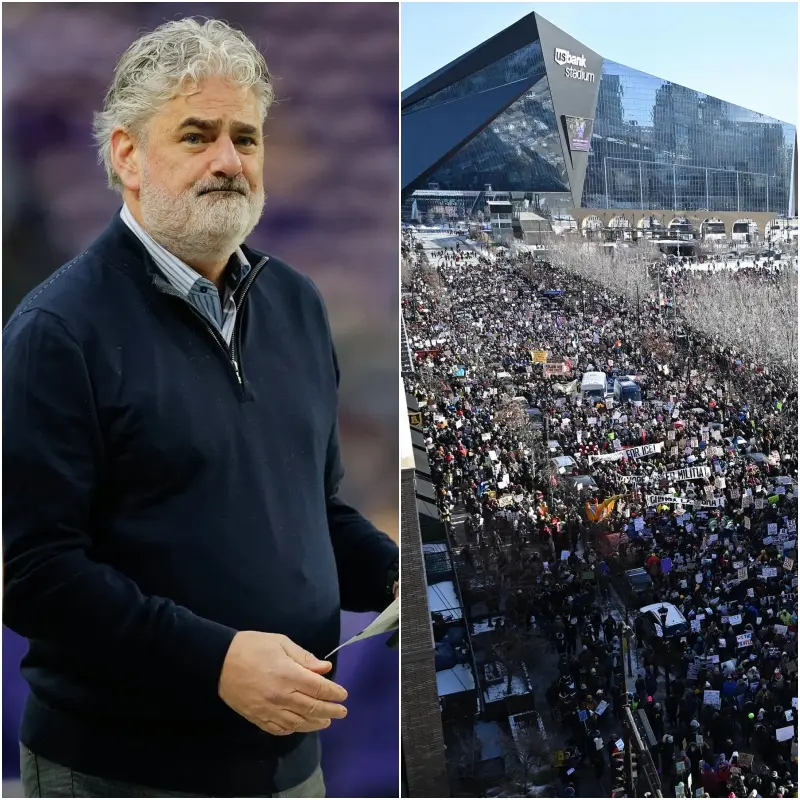
The comment occurred during a casual segment on KFAN radio when Allen, discussing the extremely cold weather, remarked, “In conditions like this, do paid protesters get hazard pay?” while referring to a local anti-ICE demonstration. The protest, held amid deep freezes, drew thousands of participants.
Allen’s question was quickly shared across social media and local news forums, where it was characterized by critics as minimizing the protesters’ motivations and circumstances. The backlash was not limited to sports fans, as broader audiences concerned with local political issues also weighed in.
Protests in Minneapolis have been particularly prominent this season following several controversial federal immigration enforcement actions. In January 2026, a federal immigration agent fatally shot a 37-year-old man during a DHS operation, an incident that helped drive public demonstrations.
Public reaction to Allen’s remark reflected a range of views. Some listeners defended his right to express personal opinions on air, citing freedom of speech and the informal nature of live talk radio. Others felt that sports media figures carry responsibilities to maintain neutrality and sensitivity when discussing complex civic matters.
Within hours of the broadcast, calls for Allen’s resignation began circulating online. Social platforms saw fans and local residents encouraging one another to contact KFAN and the Vikings organization, urging them to reconsider his role. Some questioned how a commentator’s public commentary might impact the team’s relationship with diverse segments of the community.
Amid the growing response, Allen addressed the situation with a brief message on his social media account. While he acknowledged that his words had caused hurt, his seven-word reply—short and lacking detailed apology—was perceived by many as insufficient to address the concerns raised.

Allen’s subsequent message stated that he would refrain from “cheap one-liners” moving forward and expressed sadness about the difficult events unfolding in Minnesota. He also noted that he had been moved emotionally by the broader context of tension and tragedy in the city.
The station, KFAN, temporarily removed the audio clip from its official podcast feed as the conversation unfolded. This action was interpreted by some observers as an attempt to reduce further controversy while assessing the situation internally.
Despite the apology and content removal, the conversation has continued. Many critics argue that comments suggesting protesters may be “paid” echo long-standing talking points that can undermine public trust in grassroots civic engagement. Others emphasize that individuals at demonstrations are often motivated by deeply felt concerns about public policy and community impact, not external compensation.
Within Minnesota, the protests reflect heightened local frustration following federal immigration enforcement actions. These operations, which have involved a significant federal presence and several violent confrontations, have intensified debates about civil liberties, law enforcement accountability, and state-federal relations.
Political leaders in the state, including the governor and mayor of Minneapolis, have publicly called for thorough investigations into recent shootings involving federal agents and urged restraint. These appeals aim to de-escalate tensions while ensuring transparent oversight.
Sports media commentators have long navigated the balance between personal opinion and professional standards. In Allen’s case, his remarks have reignited broader discussions about the role of sports broadcasters when addressing social and political topics. Some stakeholders argue that media figures must recognize the diverse perspectives of their audiences and exercise care when offering commentary outside traditional sports coverage.
At the same time, observers who supported Allen’s right to speak freely note that talk radio has historically been a forum for open dialogue and debate. They argue that listeners can choose whether to engage with commentary and that differing viewpoints are part of a vibrant public discourse.

From a professional standpoint, the Vikings organization and KFAN have not yet issued detailed statements about potential consequences or policy changes regarding public commentary by their on-air talent. Such decisions may involve considerations of broadcast standards, audience expectations, and the station’s relationship with sponsors.
Fans who took issue with Allen’s comments have expressed varying degrees of dissatisfaction. Some have said they are reconsidering their listening habits, while others have called for organized community forums to discuss how media personalities can better reflect and respect local concerns.
On fan forums and social channels, many have also noted past instances where Allen offered commentary that was sharply opinionated or humorous, suggesting that this situation may reflect a culmination of evolving audience expectations about neutrality and sensitivity in public discourse.
Others in the local community have urged empathy and understanding, reminding observers that individuals sometimes misspeak in live broadcasts and that meaningful engagement can arise from respectful conversation rather than instantaneous judgment.
Analysts of sports media note that situations like this highlight the evolving landscape of athlete and fan engagement. As social issues increasingly intersect with sports culture, media figures must find ways to navigate those intersections without alienating segments of their listeners.
In professional sports coverage, commentators often shape narratives not just about games, but about community identity and shared experiences. When public figures offer opinions on topics of civic concern, they may influence perceptions beyond the athletic realm.
Some fans have suggested that the broader focus should remain on supporting peaceful civic expression while recognizing the challenges involved in public safety, governance, and community relationships. They advocate for constructive dialogue that bridges diverse views rather than deepening divisions.
Despite the backlash, others have reiterated that open discourse is vital in a democratic society, and that criticisms should be balanced with an acknowledgment of diverse experiences and motivations among protest participants.
As the conversation continues, many agree that media personalities, fans, and organizations alike can benefit from thoughtful engagement and a commitment to respectful communication, even amid disagreement.
At present, Paul Allen remains employed as a commentator, and the station has not announced any personnel changes. The unfolding dialogue, however, underscores how public figures’ words—especially in moments of civic tension—can resonate widely and spark meaningful reflection across communities.