Time changes!! Then vs Now. Let’s look back at the relationship between Marc Marquez and Valentino Rossi over the past 17 years. What made the two riders become so cold towards each other?
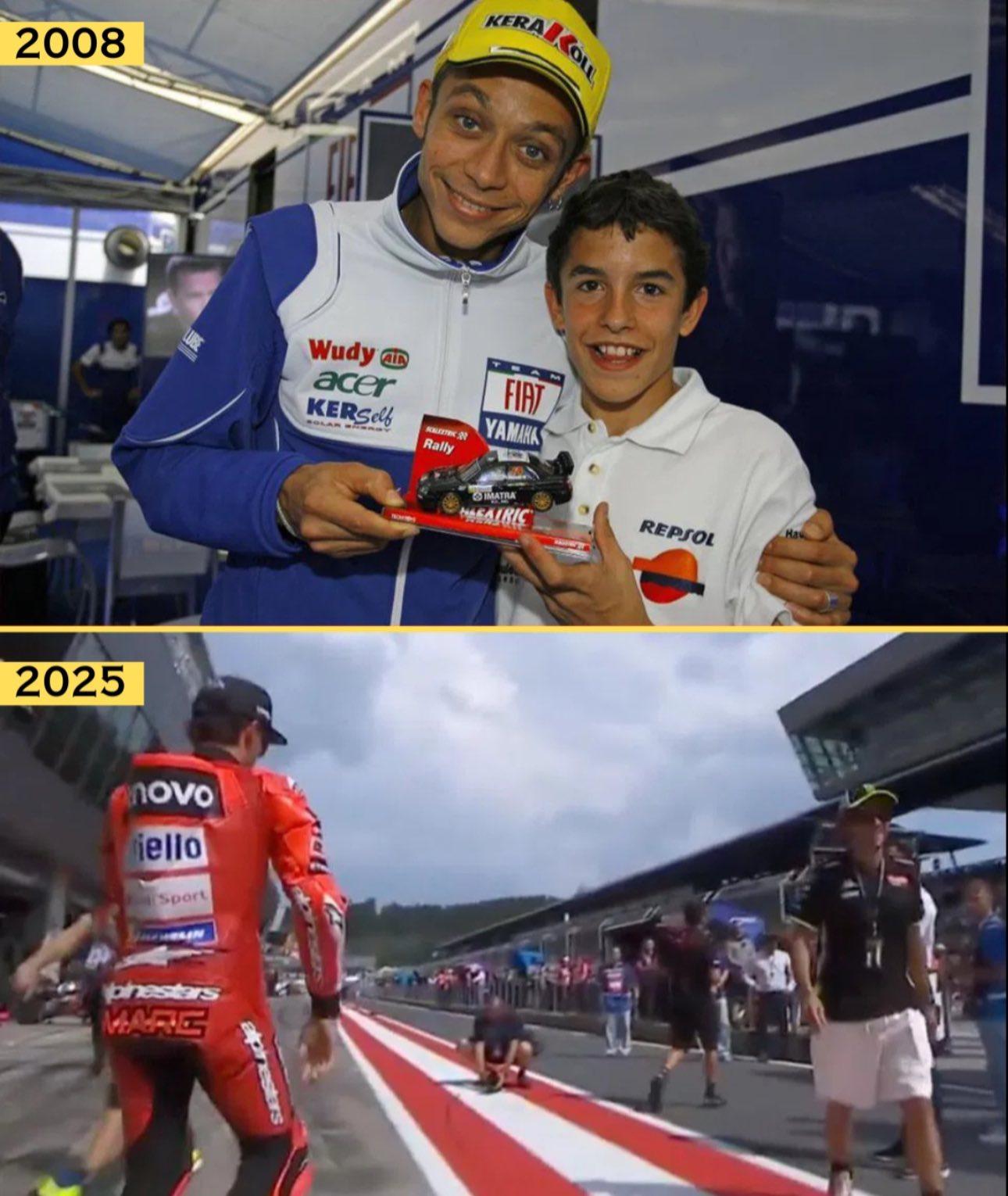
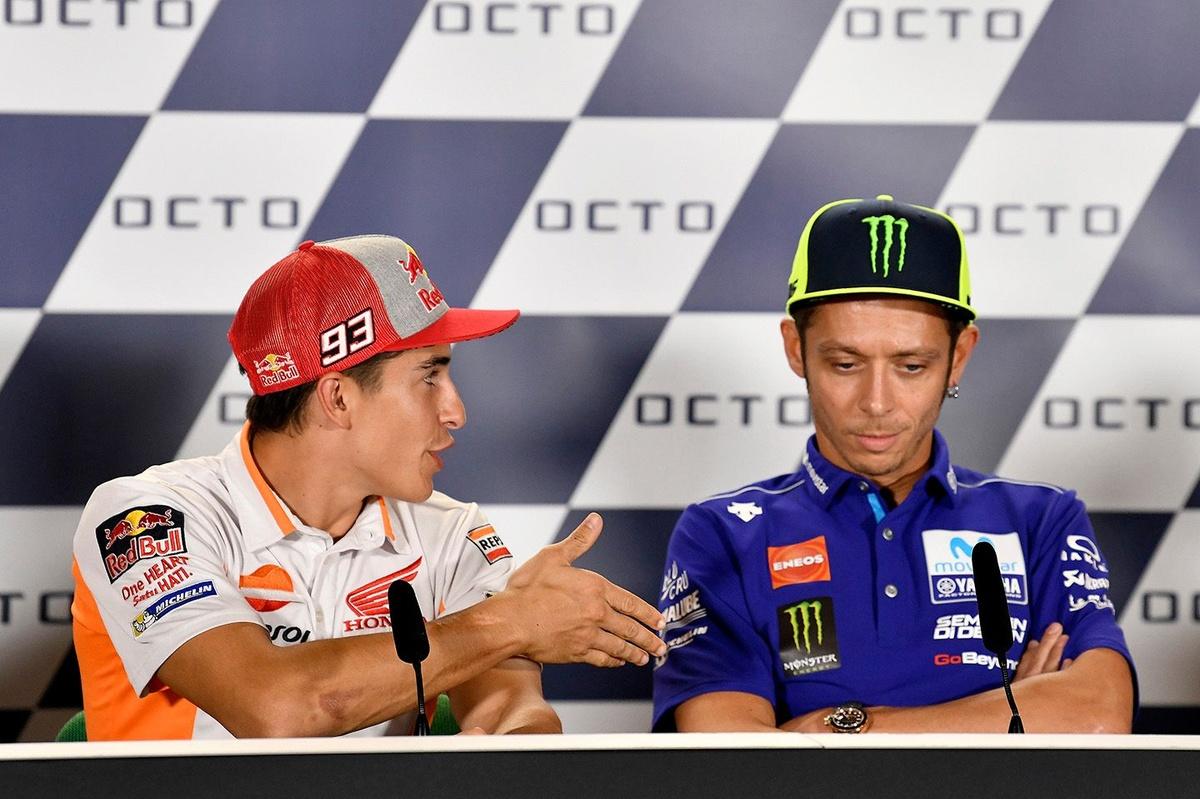
Seventeen years in, the dynamic between Marc Márquez and Valentino Rossi is one of the most discussed and controversial in MotoGP history. Once mentor and idol, then fierce rivals with lingering animosity, their relationship has shifted drastically. From respect and admiration in the early years to sharp disputes and mutual distrust, here is a look at how things turned sour—and why, even now, the coldness remains.
From Admiration to Rising Tension
When Marc Márquez entered the MotoGP scene (after success in Moto3 and Moto2), Rossi was his hero. Márquez admitted that Rossi had been someone he looked up to, collected memorabilia of, and considered a role model. Early on their duels were competitive but carried respect. Rossi, already a legend, was still performing at a high level; Márquez was the bold up-and-comer with raw speed and fearlessness.
The Break Came in 2015
The turning point is often placed in the 2015 season. Rossi was fighting to win his tenth world title. Márquez’s performance was a key factor in that championship battle—not least because Rossi accused Márquez of riding in a way to help Jorge Lorenzo. The dispute at Sepang was especially explosive: in the Malaysian Grand Prix, Rossi and Márquez clashed, Rossi was penalised (forced to start from the back at Valencia), and Lorenzo gained the advantage. Rossi later said that particular incident was a betrayal that could “never be recovered.”
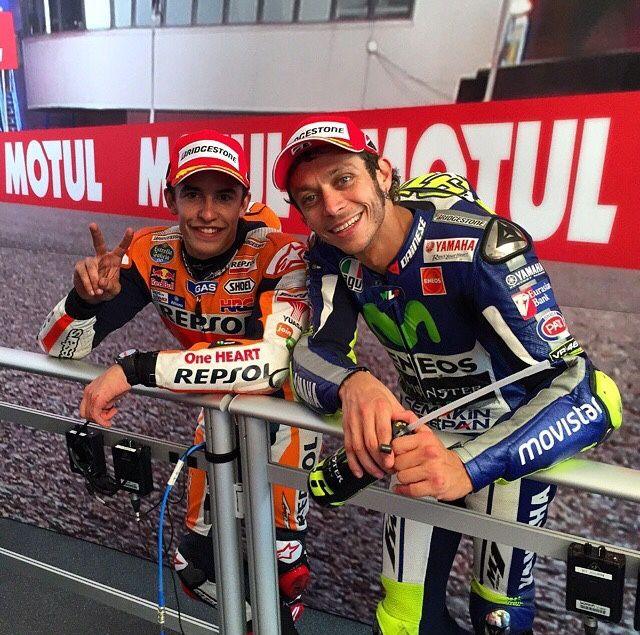
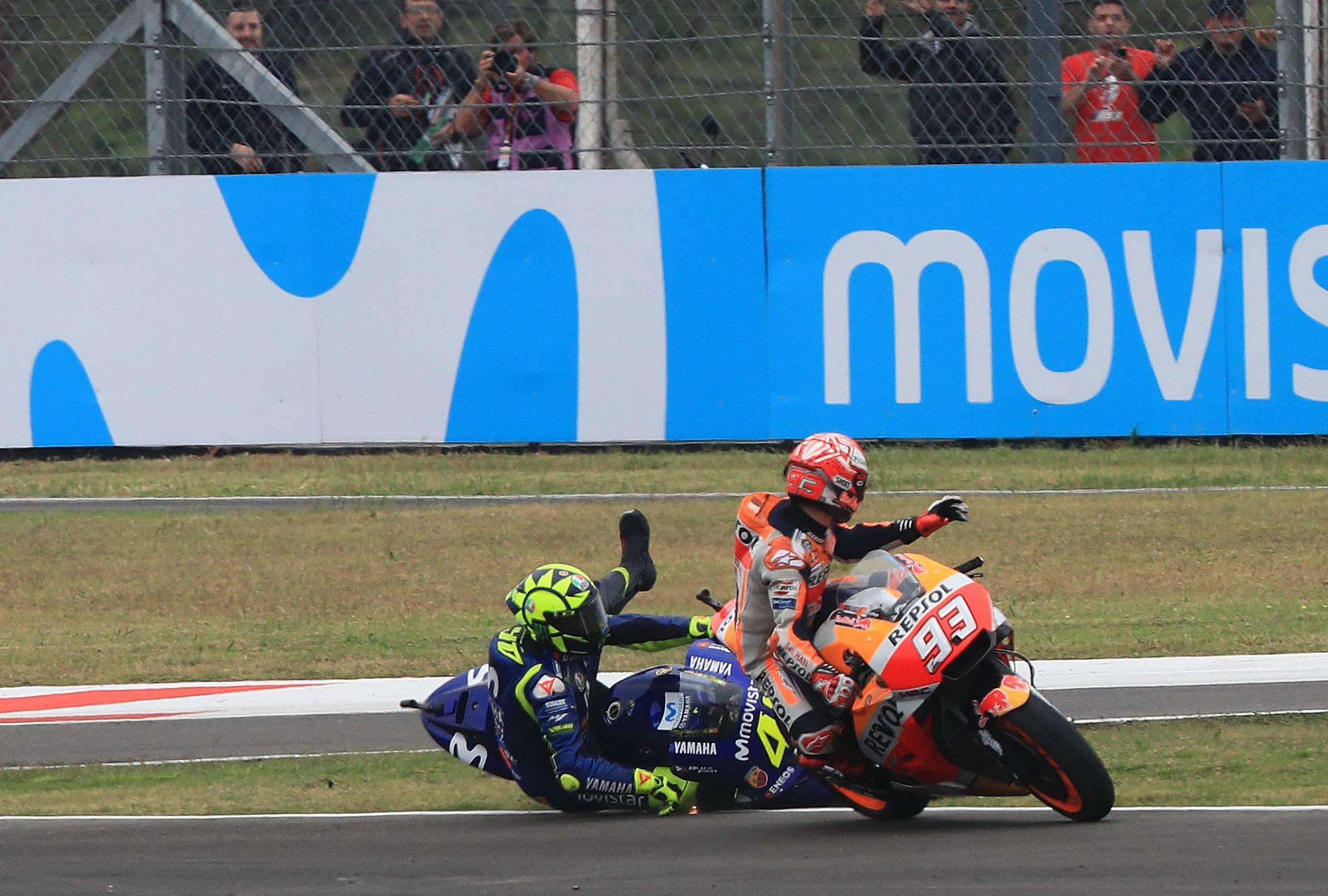
This wasn’t an isolated moment. Later collisions (e.g. Argentina, 2018) compounded the tension. Rossi referred to Márquez’s style as being dangerous, lacking respect for other riders. Márquez responded at times by insisting incidents were unintentional, a product of racing conditions and intense competition.
Attempts at Reconnection, But Fault Lines Remain
There have been moments when things appeared to soften. For example, after tragic events like the death of Luis Salom, Márquez mentioned that he and Rossi re-connected somewhat. But these moments were never enough to fully heal the rift. Rossi’s statements over the years have shown persistent bitterness, often invoking past incidents when criticizing Márquez’s conduct.
In 2025, when Márquez joined Ducati, Rossi’s advice to Pecco Bagnaia (“don’t fall into Marquez’s traps”) shows that Rossi still views Márquez in strategic, perhaps even suspicious, terms rather than as just another competitor. Márquez, meanwhile, has been more diplomatic publicly: he has said that there have been “moments of tension” but claims the relationship “continues to improve,” especially as time passes and as Rossi is no longer racing full time.
Why They Became Distanced
-
High Stakes & Crises of Trust
2015 is widely considered the rupture point. Rossi’s allegations that Márquez was favoring Lorenzo undermined trust. For Rossi, it wasn’t only about losing a title—it was about feeling manipulated, or that the competition was not “fair.” Also, incidents on track felt personal and intentional. -
Personality & Competitive Temperament
Both riders are known for being warriors—Marc with aggression and speed, Rossi with tactical awareness and long career experience. Their competitive styles clashed, not just in style of riding but in interpretation of sportsmanship and risk. Some engineers and insiders have suggested it was “inevitable” that two such strong personalities with overlapping ambitions would have clashes. -
Public Statements & Media Intensification
These incidents were followed by harsh words, interviews, criticisms, and even refusals to shake hands or reconcile publicly. Public memory amplified every conflict. Rossi’s long career and very big fan base meant his version of events had echo. Márquez’s responses likewise were scrutinized. Each felt wronged in different ways, and each felt the other had crossed lines. -
Legacy & Changed Circumstances
As Rossi aged and eventually retired, his lens changed: he watches from outside the cockpit, but continues to have strong views. Márquez, suffering injuries and moving to different teams (Honda, then Ducati), also evolved in skill, style, and position. So their relationship has changed both because of time away from direct competition and because of shifting power dynamics—what Márquez achieves now matters also in comparison with Rossi’s records.
Now: Still Cold, But More Distance Than Fire
Today, Rossi is retired from MotoGP (though active in other motorsport/endorsement spheres) and Márquez is in full swing with Ducati, chasing more wins and titles. Rossi still makes comments that indicate he hasn’t forgotten—or forgiven—key events from the past. Márquez says there is no ongoing direct engagement (“never” had further contact recently) but acknowledges tension, especially with fans and the public.
Because Rossi no longer races full time, there is less chance of on-track clashes. But the rivalry remains alive in narrative: in what Rossi says, in how Márquez is treated by some of his fanbase, in how newer riders are warned about Márquez (by Rossi) and how Márquez is aware of Rossi’s legacy.
Conclusion
The relationship between Marc Márquez and Valentino Rossi changed from idol-and-protégé to adversaries over events that involved both actions on track (crashes, aggressive moves) and off track (accusations, media portrayals). The turning point was 2015, in particular Sepang, after which trust was broken. Over time, with changing careers, retirement, and shifts in performance, the closeness evaporated.
Today the coldness remains because the wounds are deep, the incidents well remembered, and each has a strong sense of what was fair or unfair. Time may have dampened the immediacy of the conflict, but it has not healed the emotional fracture.