Gianluigi Donnarumma’s departure from Paris Saint-Germain to Manchester City, made official in the final hours of the summer transfer window, continues to cause a real earthquake in the football world. How did a club like PSG, which had fought hard in 2021 to attract one of the most promising and successful goalkeepers on the planet, manage to sell its number one for just £26 million (around €35.4 million)? The answer, as is often the case in Paris, is far more complex than it seems.

A departure announced but misunderstood
As early as August 12, Donnarumma had hinted that his future would no longer be at the Parc des Princes. Excluded from the first team by Luis Enrique, replaced by Lucas Chevalier, a new summer recruit, the Italian goalkeeper expressed himself bitterly: “Someone decided that I could no longer be part of the team.” A weighty statement that immediately triggered a media storm.
Luis Enrique initially took responsibility: he wanted “a different type of goalkeeper,” more comfortable with his feet and able to pass under pressure. But this explanation, while plausible, didn’t tell the whole story.
Campos breaks the silence
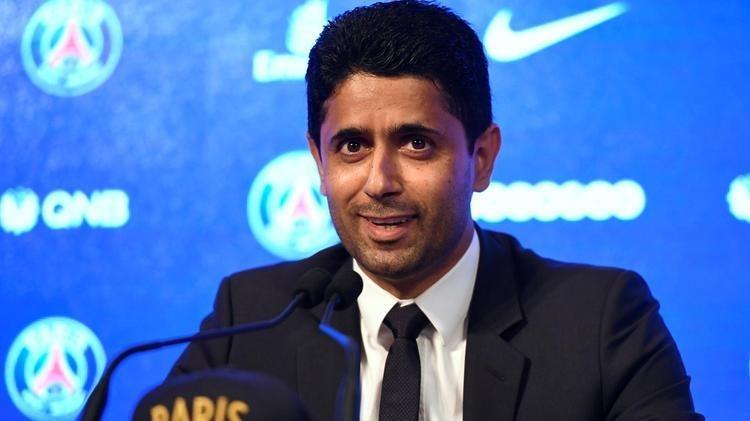
It was ultimately Luis Campos, PSG’s strategic advisor, who revealed the hidden side of this saga. In an interview with RMC Sport, he explained that the problem wasn’t just tactical, but above all… financial. Donnarumma, in the final year of his contract, was demanding a salary deemed too high for the club’s new policy.
“The club is more important than any player. Donnarumma was a combination of circumstances. When he asked for a salary at the level of the old PSG, and not the current PSG, we were forced to find solutions,” Campos said.
PSG’s new salary policy
Under the leadership of Nasser Al-Khelaïfi and Campos, Paris is now attempting to break away from the era of astronomical salaries. Gone are the days of XXL contracts guaranteeing colossal incomes, replaced by a performance-based salary scale. New signings include substantial bonuses, but a lower fixed salary.
A strategy that aims to avoid financial imbalances and jealousies in the locker room, but which, in Donnarumma’s case, caused an irreversible break.
The explosive version of the agent
But the story doesn’t end there. Donnarumma’s agent, Enzo Raiola, wanted to set the record straight. According to him, his client had already agreed to a pay cut last season. Everything seemed to be pointing towards an extension… until Paris “changed the rules of the game.”
Negotiations, initially postponed until after the Champions League final, took a turn for the worse in early August. PSG, after confirming its intention to continue with the Italian, suddenly changed course. “They told us one thing, then did another,” Raiola accuses.
A boon for Manchester City
And in this confusion, it was Manchester City who knew how to sniff out a bargain. Patient until the final hours of the transfer window, Pep Guardiola’s club took advantage of the situation to snatch Donnarumma at a bargain price… or rather, at a bargain price. £26 million for a European champion, the best player at Euro 2020, and considered one of the most talented goalkeepers of his generation: a bargain.
At City, Donnarumma arrives as a surprise signing, but with the label of an undisputed first-choice player. Pep Guardiola, who has long sought a goalkeeper capable of combining exceptional reflexes with an imposing presence in the air, may well have found his ideal last resort.
A painful break for Paris
For PSG fans, Donnarumma’s departure leaves a bitter taste. Many believe the club should have fought harder to retain a player of his caliber. Others welcome the decision to adopt a more rational economic approach, especially after years of lavish spending.
But one thing is certain: the Donnarumma case will remain a symbol. That of a PSG in transition, which wants to break with its past excesses… but which also risks losing major talents.
 Do you think PSG was right to sacrifice Donnarumma to defend its new salary policy, or is it a historic mistake that will only benefit Manchester City?